
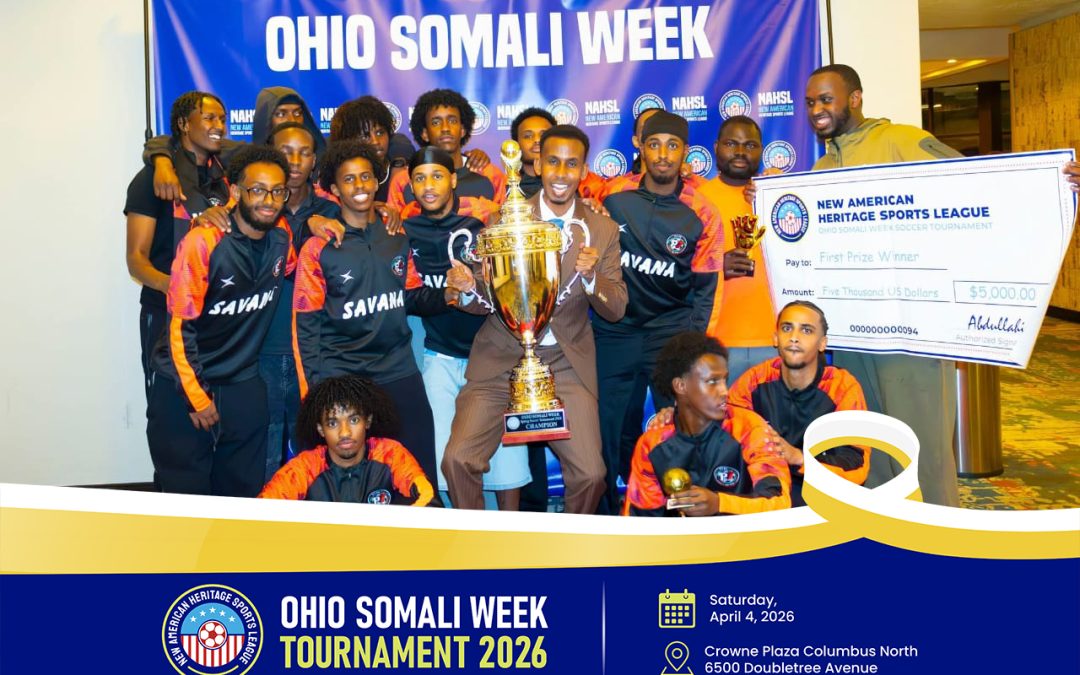
If you stand on the sidelines of a youth game, it might look simple. A ball moving back and forth. Kids running, shouting, laughing. A coach calling out instructions from the edge of the field. But if you stay a little longer, if you really pay attention, you start to see something deeper happening. You see a quiet kid slowly finding his voice, calling for the ball for the first time. You see a group that started off as strangers begin to trust each other. You see discipline forming, not because someone forced it, but because the game demands it.
For many young Somali boys growing up away from home, spaces like this matter more than they can explain. School teaches one kind of structure. Home teaches another. But the field becomes a place where everything comes together, identity, confidence, belonging. And that’s what makes it more than just a game. It’s where mistakes are allowed, but effort is expected. Where losing teaches resilience, and winning teaches responsibility. Where a coach’s words sometimes carry just as much weight as a teacher’s or a parent’s. You start to notice the changes off the field too.
The same kid who wouldn’t speak up in a group begins to carry himself differently. The one who struggled with focus starts showing up early. Small shifts, but they add up over time. That’s the part most people don’t see. They see the matches, the scores, the tournaments. But behind that is something slower, quieter, and far more important, a generation learning how to show up for themselves and for each other.
Sports give young people something steady. Something they can return to. A routine, a purpose, a sense of direction. And in communities where that structure isn’t always guaranteed, it becomes even more valuable. So no, it’s not just about football. It’s about confidence. It’s about discipline.
It’s about building something inside a young person that stays with them long after the game ends. And once you see it that way, you realize, this was never just a game to begin with.